
 MIOSA
MIOSACommas + MIOSA
Agent Infrastructure Pilot
A structured proposal for integrating governed agents, organization-scoped context, configurable models, customer-owned keys, and short-lived sandboxes into the Commas product experience.
Three actions. In this order.
Each owner can go directly to the decisions they need.
The full document remains shared. These paths reduce review time before the next session.
Open miosa.ai/docsPilot outcome, ownership, economics, commercial scope, and scale decision.
Alisha · CPOProduct and user pathFirst-dollar journey, beginner experience, enterprise controls, and product handoffs.
Bhavin · CTOArchitecture and security pathSDK, codebase boundary, hosting, secrets, BYOC, BYOK, isolation, and evidence.
Implementation teamBuild preparation pathExisting agent code, APIs, test tenant, sandbox workflow, inputs, and session agenda.
What the meeting established
The opportunity is not a generic chatbot. It is a governed execution layer behind the product experience Commas already owns.
Activation means first dollar
The strongest small-business journey removes setup friction and gets a seller to a real, reviewable, monetizable asset.
Isolation is a product primitive
The team identified per-user, short-lived environments as the missing foundation for safe agent execution and cleanup.
The same runtime can serve two markets
Small-business users need a guided path. Enterprise teams need policy, integrations, control, and deployment choice.
Do not start by rebuilding the entire agent stack.
Quality, speed, reliability, cost, and adoption.
Managed, Commas-controlled cloud, or hybrid.
One foundation, two deliberately different experiences
The interface and level of control change by customer. The core isolation, orchestration, and evidence model remains consistent.
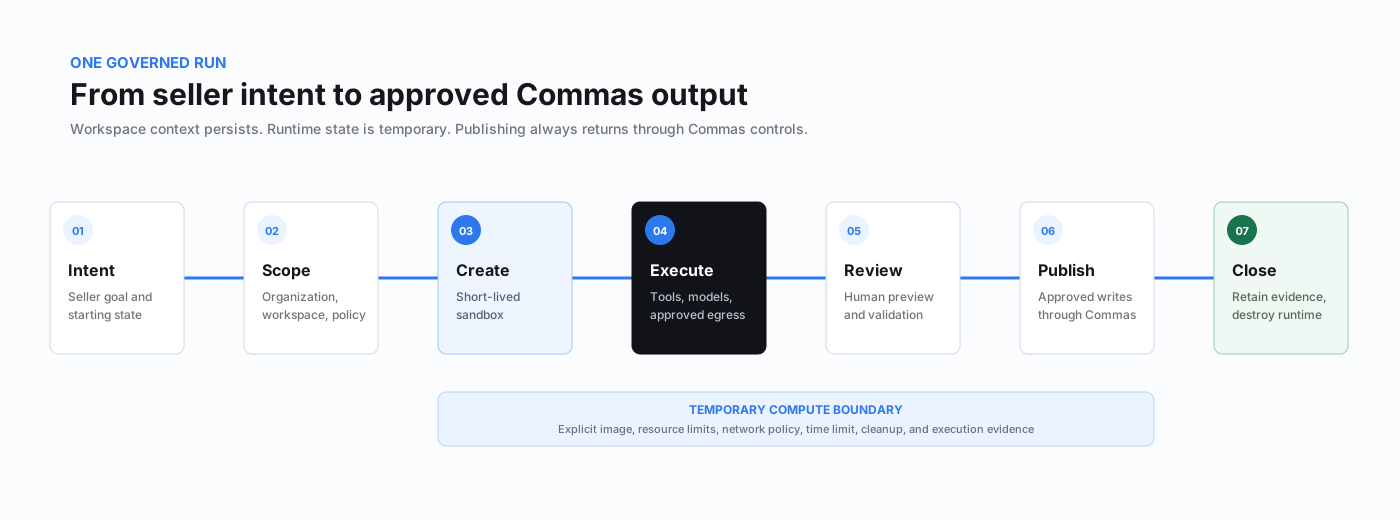
Guided path to first dollar
A constrained agent asks only what is needed, creates the commercial journey, and returns a preview for approval.
- 01Describe the offer and buyer
- 02Generate funnel and checkout assets
- 03Review a live preview
- 04Publish through Commas
Embedded operating layer
Teams configure agents, data access, policies, providers, and deployment boundaries without leaving the Commas product.
- 01Connect approved systems and data
- 02Assign organization and workspace scope
- 03Run agents under explicit policy
- 04Audit decisions and actions
The next conversation starts with the actual Commas stack
MIOSA supports language-specific integration clients and can add adapters where needed. The first technical task is mapping the real codebase, not guessing from a demo.
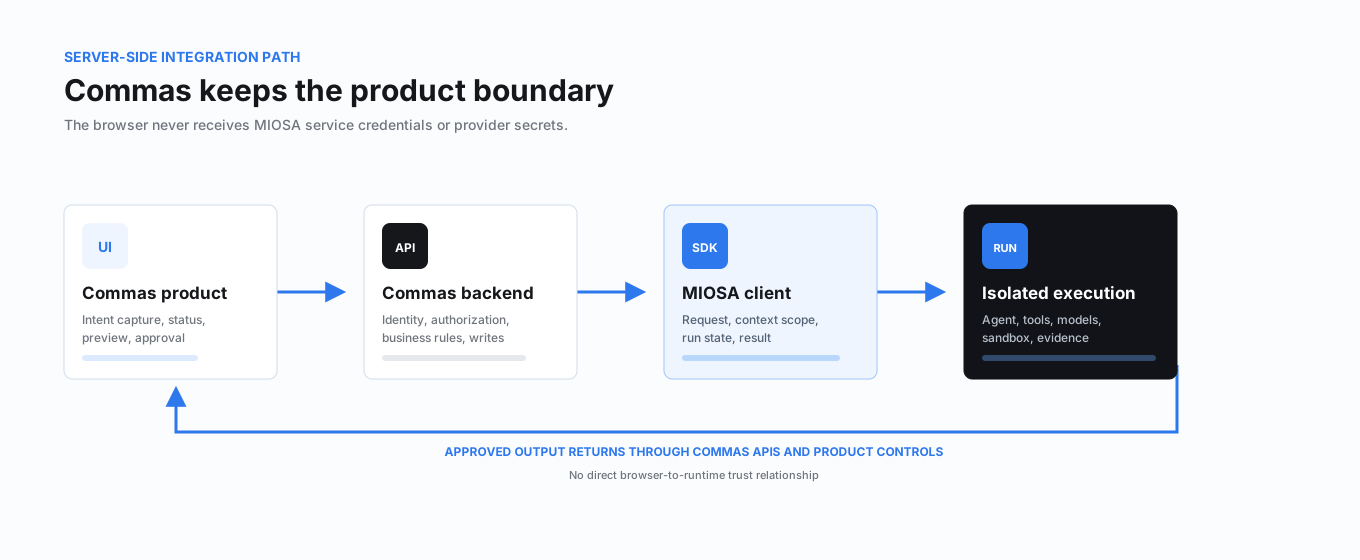
Inspect the Commas codebase
Identify backend language, deployment model, authentication boundary, API clients, and the current funnel agent implementation.
Install the appropriate SDK client
Use the supported client for the Commas backend. Add a custom adapter only where the existing application boundary requires one.
Map identity and tenancy
Translate Commas customers, teams, users, and projects into explicit organization and workspace scopes before any agent receives context.
Define the agent contract
Set instructions, tools, source access, output schema, model parameters, budgets, review rules, and publishing permissions.
Broker secrets and launch isolation
Pass approved credentials through a secret boundary. Create a short-lived sandbox with explicit image, network, time, and resource policies.
Review, publish, and close
Return a preview to Commas, require the configured approval, write through Commas APIs, retain evidence, and destroy temporary runtime state.
const run = await miosa.runs.create({
  organization: commasCustomerId,
  workspace: sellerWorkspaceId,
  agent: "first-dollar-builder",
  input: sellerIntent,
  review: "required"
});
Exact syntax and language are confirmed against the current SDK and Commas backend during discovery.
Persistent business context and temporary compute are different things
A workspace is the governed context boundary. A sandbox is the temporary execution environment created for a run. Confusing them creates data leakage and lifecycle ambiguity.
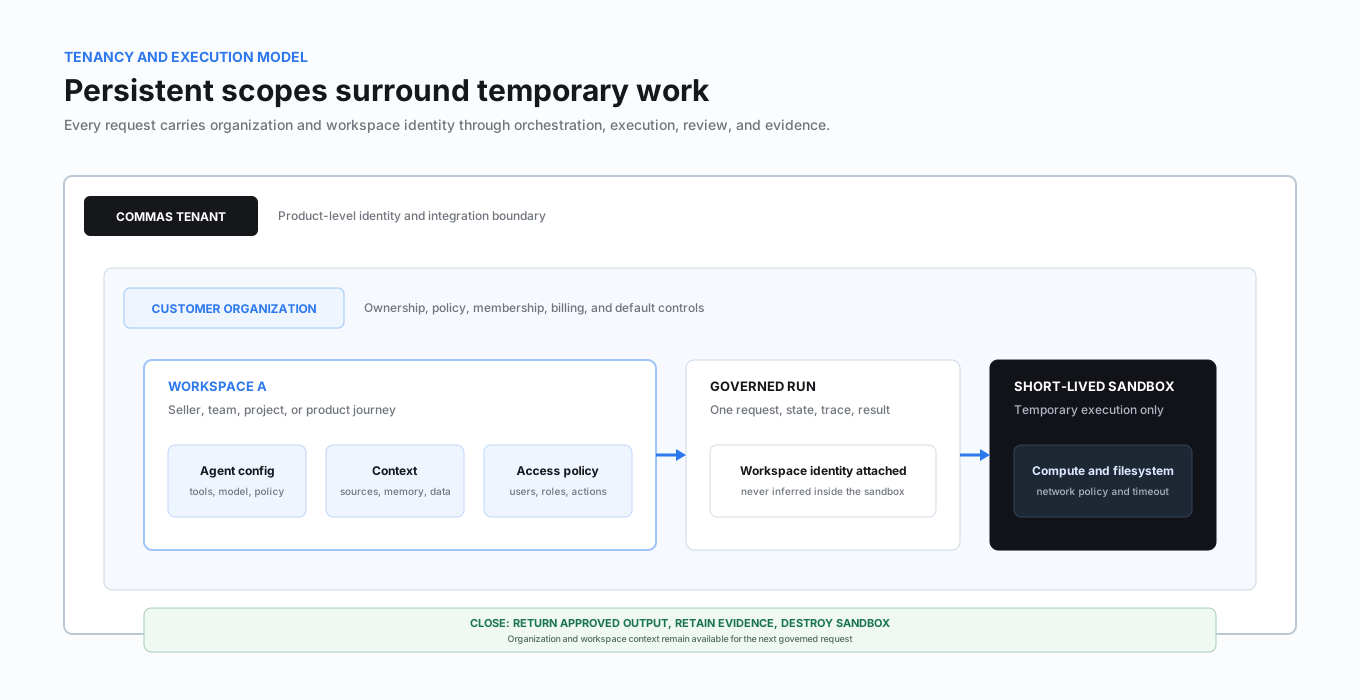
Ownership and policy boundary for a Commas customer, business, or enterprise account.
Scoped context for a seller, team, product journey, client, or project.
Configured role with instructions, tools, context access, model policy, and output contract.
One governed request with an identity, state, trace, cost, result, and review status.
Temporary compute, filesystem, process, and network boundary used by the run.
Durable record of what ran, what it accessed, what it returned, and whether cleanup succeeded.
Commas controls the experience. Each journey controls its agent configuration.
The pilot should expose the minimum configuration needed by the team while keeping secrets, infrastructure controls, and provider access behind appropriate boundaries.
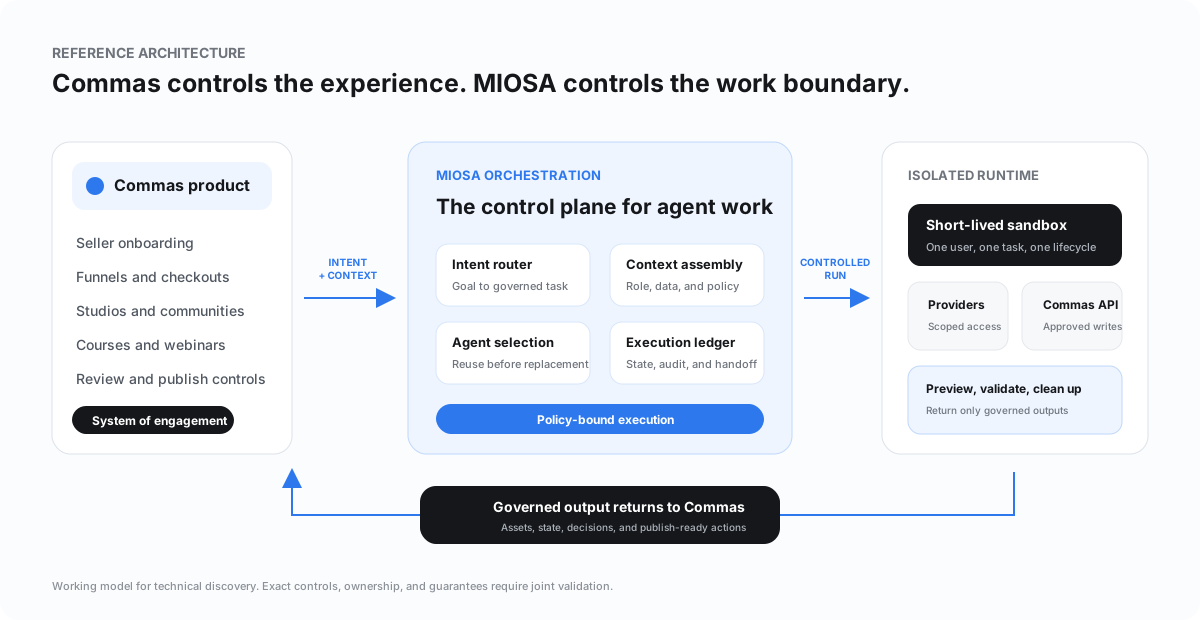
The pilot must produce a reviewed threat model, ownership matrix, data flow, retention policy, and testable acceptance criteria before production.
Start with 3-5 selected users and one measurable journey
Roberto works directly with product and engineering to map the codebase, configure the integration, instrument the pilot, and transfer the operating model.
Technical discovery
Codebase, SDK, agent code, identity, APIs, data, security, deployment, baseline.
Output: decision recordControlled pilot
One first-dollar journey, 3-5 users, isolated runs, review, metrics, support.
Output: measured integrationScale decision
Assess quality, economics, reliability, placement, ownership, and enterprise path.
Output: go, revise, or stopCodebase and SDK mapping
Select the integration boundary and implement required adapters.
Tenancy design
Map users, teams, organizations, workspaces, agents, and data access.
Agent configuration
Instructions, tools, models, parameters, keys, budgets, and outputs.
Controls and transfer
Isolation tests, instrumentation, documentation, and team enablement.
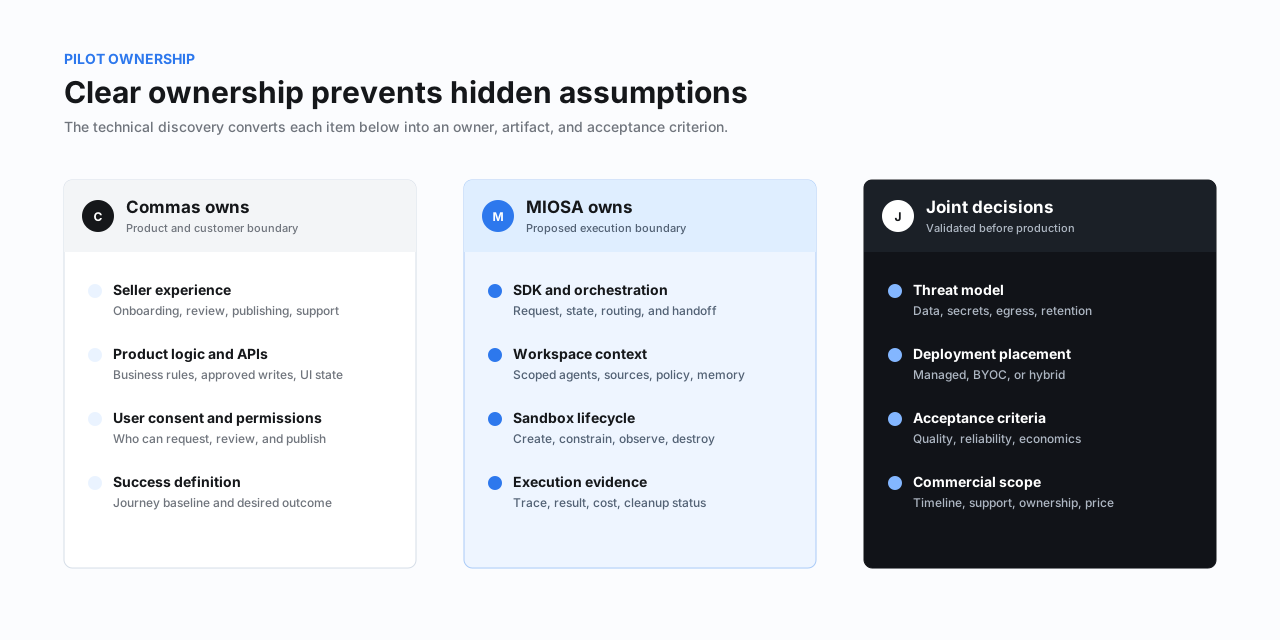
Technical discovery and pilot selection
Reply to the existing email thread, confirm the time, and include the product and engineering owners who can answer implementation questions.